
What Bali's Sat Kerthi Teaches Us About Credible Nature-Based Finance
ICBS 2026 Throwback
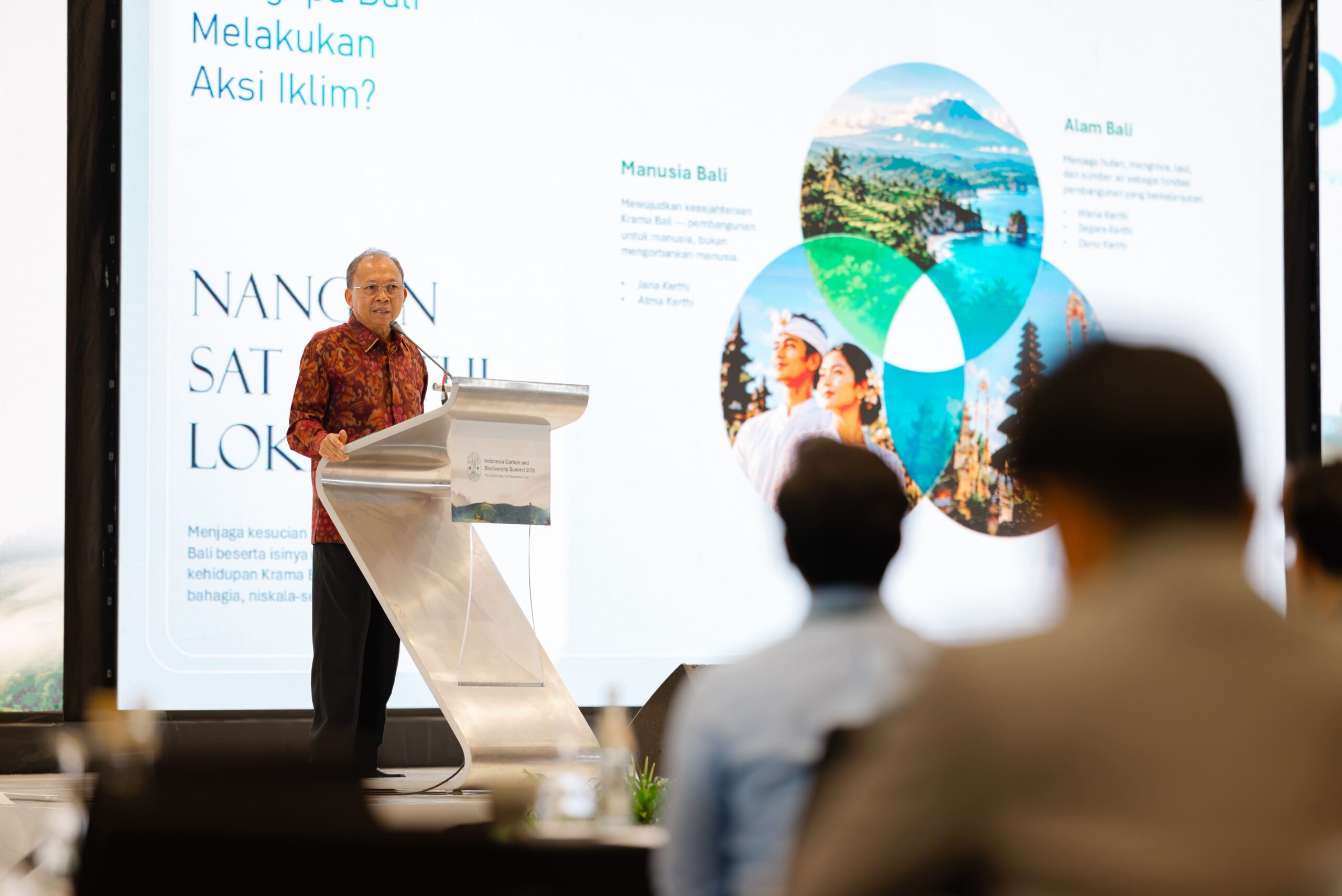
Earlier this month, the Indonesia Carbon and Biodiversity Summit (ICBS) 2026 opened in Bali. Before any panel on carbon markets, biodiversity finance, or project development began, the summit started with a message from our host province.
Dr. Ir. Wayan Koster, Governor of Bali, officially opened ICBS 2026 and welcomed delegates to Bali. Looking back, his remarks set a frame that stayed with us through both days of the summit: environmental protection works best when it sits inside a long-term development model, not next to it.
The Vision Behind the Opening
At the centre of the Governor’s address was Nangun Sat Kerthi Loka Bali, the provincial development vision that connects Bali’s nature, people, and culture.
The vision is built on Sat Kerthi, six sources of wellbeing that Balinese tradition holds should be honoured and kept in balance:
- Atma Kerthi, the human soul;
- Segara Kerthi, the sea and coast;
- Danu Kerthi, water sources and lakes;
- Wana Kerthi, forests and plants;
- Jana Kerthi, people;
- Jagat Kerthi, the wider universe;
It is a spiritual and a practical framework at the same time, and Bali has turned it into policy. The Governor pointed to clean energy, electric mobility, organic agriculture, waste reduction, and ecosystem protection, along with a target of net zero emissions by 2045.
Where Nature Becomes Natural Capital
The Governor also drew attention to Bali’s forests, mangrove ecosystems, and seagrass areas. These landscapes matter first for biodiversity, coastal resilience, water systems, and local livelihoods. They also form part of the natural capital base from which future carbon and blue carbon initiatives may emerge.
It is worth being careful here. Nothing in the opening suggested that carbon finance is the point of Sat Kerthi. The point is the balance. If finance enters the picture, it enters on the terms that balance sets.
The Guardrail: Value Must Flow Back to Nature and People
That is the most useful idea we took from the opening. The Governor’s emphasis was that any economic value generated from nature should ultimately strengthen Bali’s environment, communities, and long-term resilience.
For anyone working on nature-based finance, that works as a design principle. It also echoes what we heard from practitioners on stage over the two days:
- On biodiversity finance, our CEO Bagus Pratomo cautioned that “we should not force biodiversity to become carbon.”
- On conservation funding, our COO Zulfan Herman offered a simple test for any project: “what won’t happen without carbon financing?”
- On protected landscapes, Dr. Ir. Wiratno reminded the room that “the value of the park is not only carbon.”
Three different sessions, one shared message. Finance should follow what a landscape and its people actually need, not the other way around.
What Project Developers Can Take From This
A few practical lessons follow for anyone building nature-based projects in Indonesia.
Start from the landscape, not the instrument. The most credible projects begin with real ecological and community needs, then ask what kind of finance can support them.
Treat communities as partners from day one. Participation, rights, and benefit sharing shape whether a project earns legitimacy, and whether it lasts.
Read local policy as part of the project. Bali’s experience shows how energy, transport, agriculture, and land use policy can create the enabling conditions for climate investment, or leave it out. Provincial priorities matter as much as national frameworks.
Let quality lead. Carbon markets can open new sources of finance, but their long-term value depends on the quality of the environmental outcomes underneath them.
Looking Back, Looking Ahead
Indonesia’s carbon and biodiversity opportunities sit inside real landscapes and local economies. Building credible markets means national policy, private investment, and provincial priorities moving in the same direction.
ICBS 2026 opened with a reminder of why that matters. Thank you to Governor Wayan Koster for opening the summit and sharing Bali’s perspective on climate action, natural capital, and sustainable development. As a sponsor and participant, we were glad to be in the room.
At Decarbonize Indonesia, that is the standard we hold ourselves to when developing nature-based projects: credible on the numbers, and accountable to the landscapes and communities behind them.
Working on a conservation challenge? Talk to the Decarbonize Indonesia team about where carbon finance genuinely fits.
References
- Bali Provincial Government Spatial Planning Information System. “Landasan Filosofi Pembangunan Bali 2025-2030: Menyatu dengan Alam, Menyucikan Sad Kerthi.” https://tarubali.baliprov.go.id/landasan-filosofi-pembangunan-bali-2025-2030-menyatu-dengan-alam-menyucikan-sad-kerthi/
- Bali Provincial Education, Youth and Sports Office. “Nangun Sat Kerthi Loka Bali.” https://disdikpora.baliprov.go.id/nangun-sat-kerthi-loka-bali/
Adapted from the opening session recap shared by ICBA (Indonesia Carbon & Biodiversity Alliance) following ICBS 2026.
Read More Our Articles

Your Strategic Pathway to a Net Zero Future
Or contact us directly

Jl. Prof. Joko Sutono SH No.7, RT.14/RW.6, Petogogan, Kec. Kby. Baru, Kota Jakarta Selatan, Daerah Khusus Ibukota Jakarta 12160
Email: contact@decarbonize.id
WhatsApp: 0813-1406-0000

Jl. Prof. Joko Sutono SH No.7, RT.14/RW.6, Petogogan, Kec. Kby. Baru, Kota Jakarta Selatan, Daerah Khusus Ibukota Jakarta 12160
Kode Pos: 12160
Email: contact@decarbonize.id
WhatsApp: 081234567890
© 2026 Decarbonize Indonesia. All rights reserved.