
Why Fires Keep Coming Back and The Funding Gap Behind Peatland Fire Prevention
This October, the haze has been hard to ignore. Palangka Raya has extended its fire emergency status until 9 November, and smoke from forest and land fires (karhutla) has reached as far as Singapore and Malaysia. For the people breathing it, that means smoky days, health worries, and disrupted routines. It also brings back a question Indonesia has wrestled with for years: if we know how to prevent these fires, why do they keep coming back?
Prevention costs far less than suppression, but it’s harder to fund
The last major crisis shows what’s at stake. The World Bank estimated that the 2015 fires cost Indonesia US$16.1 billion, equal to 1.9 percent of GDP, and that roughly a third of the area burned was peatland.
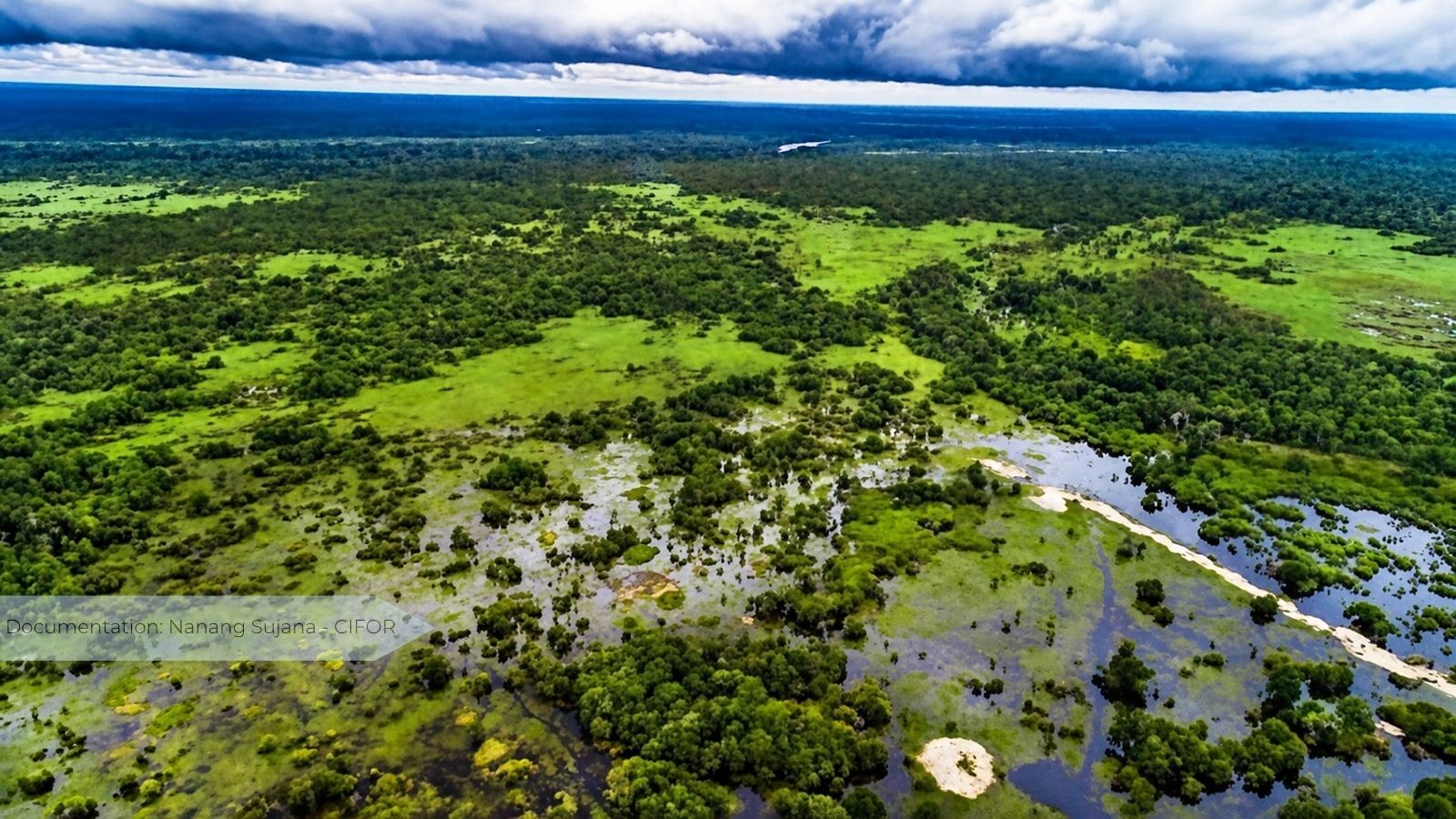
Peatland is what makes the problem so stubborn. Drained peat dries out and burns easily, and once it ignites it can smolder underground, which makes the fire slow and expensive to put out. That’s why Indonesia’s peatland restoration agency (BRG, now BRGM) built its approach around three steps known as 3R: rewetting degraded peat, revegetating burned areas, and revitalizing local livelihoods. Keeping peat wet comes first, because wet peat is harder to burn.
The economics point the same way. The World Bank has cited studies showing that every US$1 spent on fire prevention can save US$30 in suppression costs. Even so, at the time the Bank noted that Indonesia’s fire management was focused mainly on suppression.
Here’s the catch: prevention is a long game. Rewetting canals, restoring vegetation, running patrols, operating early warning systems, and building fire-free livelihoods all need steady funding across many dry seasons. In practice, attention and budgets tend to peak when the smoke does. Public budgets (APBN/APBD) are stretched across many priorities, which means the quiet, repetitive work that happens before the fires is often the hardest to fund. That’s the funding gap. It’s less about missing know-how, and more about missing predictable, multi-year money.
Where jurisdictional REDD+ comes in
Jurisdictional REDD+ rewards emission reductions across a whole province or country, instead of one project at a time. The provincial government leads, and results are measured across its entire territory. If it’s designed well, it can be one way to help close that funding gap.
Four steps from a provincial plan to prevention funding
- Build a provincial REDD+ program with local government. Everything starts with the province defining its program: which areas it covers, which actions it will take (such as fire prevention, peatland restoration, and better land management), who is responsible for what, and how benefits will be shared. Buyers and verifiers need a clear program and accountable institutions before anything else can happen.
- Secure early commitment through an ERPA. An Emission Reductions Payment Agreement (ERPA) is a long-term contract in which a buyer or investor agrees to pay for verified emission reductions that the jurisdiction will deliver. It gives the province a predictable signal of demand. Some agreements allow part of the payment to arrive early, but the money is always tied to results that still have to be delivered and verified.
Indonesia already has a real reference point. In 2020, it signed an ERPA with the World Bank’s Forest Carbon Partnership Facility (FCPF) Carbon Fund for East Kalimantan, covering 22 million tonnes of emission reductions and up to US$110 million in payments. That agreement has now run its full course: the contracted reductions were delivered, and the full US$110 million was paid in two tranches, an advance of US$20.9 million in November 2022 and the remaining US$89.1 million in December 2025. The funds follow a publicly disclosed benefit-sharing plan. It’s a forest-focused program rather than a peatland fire program, but it shows how the mechanism works in Indonesian conditions, from signing to verified results to payment.
- Put the money where prevention actually happens. Once funds are committed, they can be directed toward early warning and fire detection systems, community fire patrols, peatland rewetting and restoration, and incentives for communities to prepare land without burning. Transparent benefit sharing matters a lot at this stage: people who protect the land should see returns from it, and communities should have a say in how incentives are designed.
- Measure, verify, and issue credits under ART TREES. Finally, results have to be proven. ART TREES (The REDD+ Environmental Excellence Standard, run by the Architecture for REDD+ Transactions) is a standard built for jurisdictional programs. A jurisdiction registers its program, measures emissions against a conservative crediting level, and has its results checked by an independent third-party verifier. Only after that can serialized credits be issued on a public registry. Those credits can then be sold into voluntary or compliance markets, counted toward national climate commitments under the Paris Agreement, or used by donors as a pay-for-performance mechanism.
One important detail: whether fire-related emissions count toward credits depends on how a jurisdiction defines its accounting scope. That means each program has to be designed and checked against the standard’s requirements, not assumed.
What carbon finance can and can’t do
What it can do
- Add predictable, multi-year funding for prevention work that budgets alone often struggle to sustain.
- Reward results, not promises. Payments are linked to verified emission reductions, which gives everyone a reason to deliver and to measure honestly.
- Raise the bar on transparency. Independent verification, safeguards, and public registries make it easier for anyone to see what was achieved.
What it can’t do
- Replace APBN/APBD. Carbon finance complements public budgets. Core responsibilities such as fire management, institutions, and peatland governance remain public duties.
- Replace law enforcement. Rules on land clearing and burning still have to be enforced, and violations still need accountability. Credits are not a license to burn.
- Pay out before results exist. Credits are issued only after emission reductions are verified, which means a program has to deliver first. A jurisdiction that falls short won’t earn them.
- Work as an emergency response. Building a program, negotiating agreements, and passing verification takes years. It can’t put out this year’s fires.
- Succeed without trust. Without clear benefit sharing and genuine community involvement, even a well-funded program can lose the support it depends on.
A tool, not a silver bullet
Fires are, at their core, a governance, land-use, and livelihood problem. Jurisdictional REDD+ doesn’t change that. What it can offer is something prevention has long lacked: money that is predictable, tied to results, and open to public scrutiny. Used alongside public budgets and firm enforcement, that’s worth understanding, especially as more regions explore jurisdictional approaches.
Further Reading
- World Bank, “The Cost of Fire: An Economic Analysis of Indonesia’s 2015 Fire Crisis”: https://openknowledge.worldbank.org/entities/publication/391e19f4-18f7-56c2-8c28-bb89cc9e7d6f
- World Bank knowledge note on the 2015 fire crisis (PDF): https://documents1.worldbank.org/curated/pt/776101467990969768/pdf/103668-BRI-Cost-of-Fires-Knowledge-Note-PUBLIC-ADD-NEW-SERIES-Indonesia-Sustainable-Landscapes-Knowledge-Note.pdf
- Strategi 3R dalam Upaya Restorasi Gambut: https://indonesiabaik.id/infografis/strategi-3r-untuk-restorasi-lahan-gambut
- Strategi 3R dalam Upaya Restorasi Gambut: https://kaltim.antaranews.com/berita/139065/brgm-lakukan-mitigasi-banjir-dan-karhutla-di-lahan-gambut
- UNEP, “The Architecture for REDD+ Transactions (ART): Attracting New Investment to Protect and Restore Forests”: https://wedocs.unep.org/handle/20.500.11822/28932
- ART, “ART Overview for Stakeholders” (May 2025): https://winrock.org/wp-content/uploads/2025/05/ART-Overview-for-Stakeholders-May-2025.pdf
- Forest Carbon Partnership Facility, Indonesia country page (East Kalimantan ER Program): https://forestcarbonpartnership.org/results-story-announcement/indonesia-completes-delivery-contracted-emission-reductions-under-fcpf.
- GGGI, “Land-Based GHG Emission Reduction Program Milestone in East Kalimantan”: https://gggi.org/land-based-ghg-emission-reduction-program-milestone-in-east-kalimantan/
- Katadata, report on Palangka Raya’s extended fire emergency status (October 2026): https://katadata.co.id/berita/industri/6ad57fcc8a71a/sinar-mas-perusahaan-haji-isam-wilmar-respons-karhutla-dan-asap-singapura
Read More Our Articles

Your Strategic Pathway to a Net Zero Future
Or contact us directly

Jl. Prof. Joko Sutono SH No.7, RT.14/RW.6, Petogogan, Kec. Kby. Baru, Kota Jakarta Selatan, Daerah Khusus Ibukota Jakarta 12160
Email: contact@decarbonize.id
WhatsApp: 0813-1406-0000

Jl. Prof. Joko Sutono SH No.7, RT.14/RW.6, Petogogan, Kec. Kby. Baru, Kota Jakarta Selatan, Daerah Khusus Ibukota Jakarta 12160
Kode Pos: 12160
Email: contact@decarbonize.id
WhatsApp: 081234567890
© 2026 Decarbonize Indonesia. All rights reserved.