
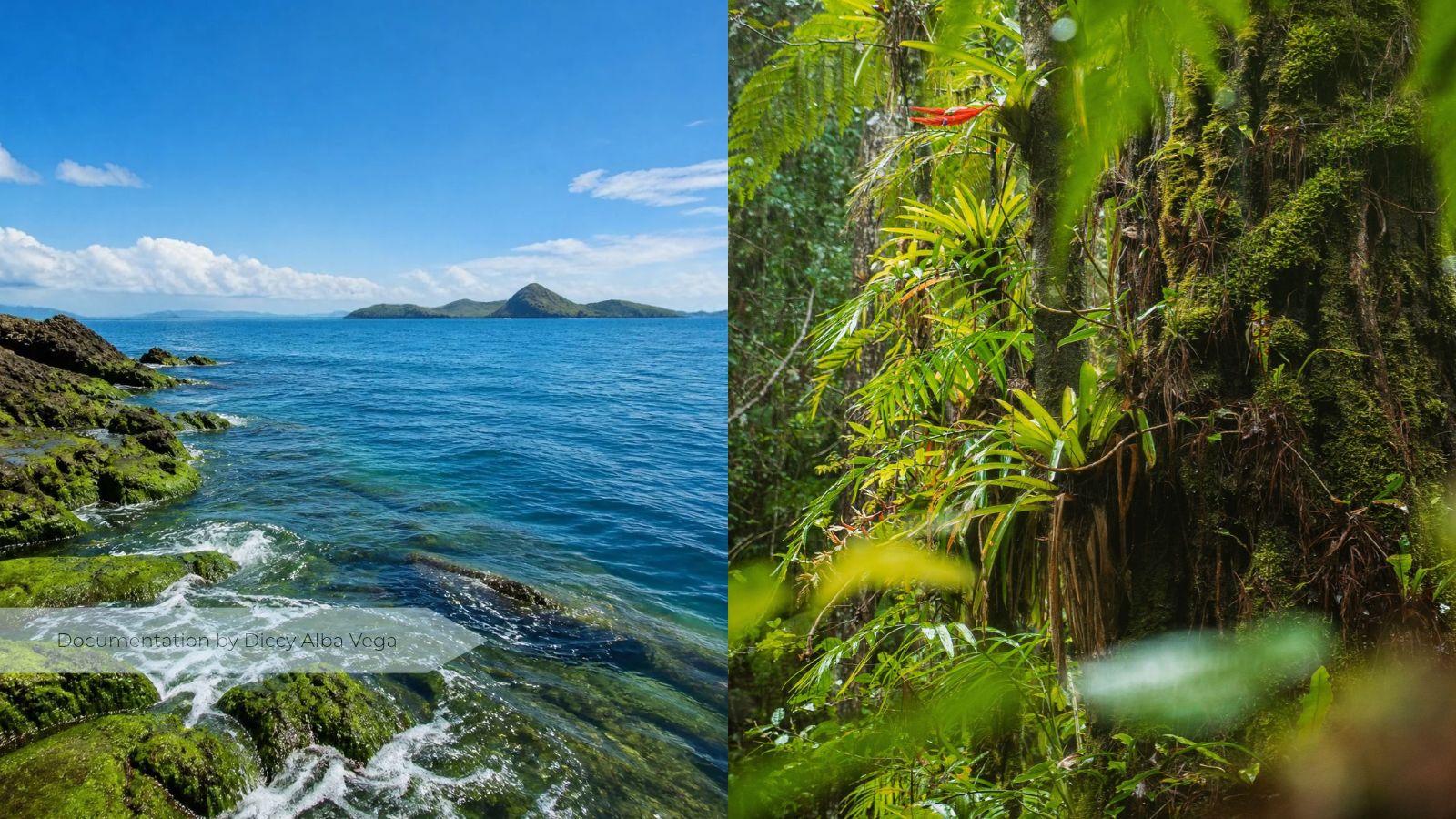
Nature-Based Solutions in Indonesia: Forestry and Blue Carbon Opportunities
Indonesia holds some of the largest natural assets for climate action anywhere. On land, there are vast tropical forests and peatlands. Along the coast, there are mangrove forests and seagrass meadows that have put blue carbon Indonesia on the global radar. When managed well, both can absorb and store carbon while protecting biodiversity and supporting local livelihoods.
But having big potential doesn’t mean having projects ready to go. This article looks at two major nature-based solutions (NbS) opportunities in Indonesia, forestry and blue carbon, the challenges that come with them, and what makes a project worth trusting.
What are nature-based solutions, and why Indonesia?
Nature-based solutions are approaches that protect, restore, or manage natural ecosystems to address climate challenges while delivering benefits for people and biodiversity. In a carbon context, that means either reducing emissions from ecosystem damage or increasing carbon removal through ecosystem restoration.
Indonesia stands out because of its scale. The country is known for having the world’s third-largest tropical rainforest, along with peatlands and coastal ecosystems that are rich in carbon.
Forestry opportunities: forests and peatlands
In the forestry sector, three approaches are used most often to develop carbon projects:
- IFM (Improved Forest Management): improving how existing forests are managed, for example by reducing logging impacts or extending conservation periods.
- REDD+: preventing deforestation and forest degradation.
- ARR (Afforestation, Reforestation, Revegetation): restoring degraded land through replanting.
The policy framework is moving forward, too. Presidential Regulation 110/2025 provides the foundation for carbon economic value, and Ministry of Forestry Regulation No. 6 of 2026 is among the implementing rules mentioned at the launch of the national carbon unit registry (SRUK) in July 2026. That means forestry project developers now have a clearer national path for registering their carbon units.
Blue carbon Indonesia: mangroves and seagrass
Blue carbon is the carbon stored in coastal and marine ecosystems, mainly mangroves and seagrass meadows. According to government figures, Indonesia has roughly 3.45 million hectares of mangroves and 660,000 hectares of seagrass, which are linked to about 17 percent of the world’s blue carbon reserves.
In February 2026, the government launched the National Action Plan for the Protection and Management of Blue Carbon Ecosystems 2025 to 2030 (RENAKSI), with 21 action plans. The plan shows that blue carbon is no longer seen only as a source of carbon credits. It’s treated as natural capital that supports food, coastal protection, and the livelihoods of coastal communities.
For project developers, that’s both good news and a reminder: a strong blue carbon project has to fit this broader agenda, not just chase credit numbers.
Forestry and blue carbon: what’s different for project developers?
Both are NbS, but the challenges often differ:
- Ecosystems and methodologies. Forests and peatlands use approaches such as IFM, REDD+, and ARR. Mangroves and seagrass have their own ecosystem characteristics and measurement needs, including measurement frameworks that are still being developed through RENAKSI.
- Policy framework. Forestry operates under Presidential Regulation 110/2025 and its forestry implementing rules. Blue carbon now has RENAKSI as its national direction.
- Field-level challenges. For both, clear rights over land and carbon, and community involvement, determine whether a project can move forward.
The real challenge: from potential to projects
At ICBS 2026, speakers on one panel discussed what’s called the “projectability gap,” the distance between Indonesia’s large blue carbon potential and the number of projects actually ready to reach the market, as reported by Fastmarkets. Land tenure questions, scientific due diligence, and community engagement add cost and uncertainty long before the first credit is issued.
On funding, a 2026 CIFOR-ICRAF study concluded that public finance remains the backbone of mangrove investment in Indonesia, and that scale depends on transaction readiness. So early-stage project development takes patience, flexible capital, and solid technical preparation.
Five things that make an NbS project worth trusting
Whether it’s in a forest or along the coast, here are five things to check:
- Clear rights over land and carbon. Who holds the rights to the project area and its carbon must be documented.
- Strong baseline and MRV. Measurement, reporting, and verification need to be data-driven and open to independent audit.
- Communities involved and benefits shared. Projects that overlook communities are prone to conflict and hard to sustain.
- Recognized standards and independent verification. The project follows an accepted standard and is verified by a third party.
- Recorded in the national registry. Carbon units are recorded in SRUK so they are transparent and not counted twice.
From potential to credible projects
The opportunities in forestry and blue carbon in Indonesia are real, but their value is only realized when potential is turned into projects that are technically strong, legally clear, and fair to communities. At Decarbonize, we support the development of nature-based carbon projects on the same principle: integrity first, numbers second.
Ready to turn potential into a credible carbon project?
Further Reading
- ANTARA News, “Indonesia launches national action plan for blue carbon ecosystems”: https://en.antaranews.com/amp/news/405234/indonesia-launches-national-action-plan-for-blue-carbon-ecosystems
- Ecobiz Asia, “Indonesia Sets 17% Global Blue Carbon Protection Target Under 2025-2030 Action Plan”: https://ecobiz.asia/indonesia-sets-17-global-blue-carbon-protection-target-under-2025-2030-action-plan/
- Fastmarkets, “Indonesia’s blue carbon potential faces projectability gap, ICBS panel hears”: https://www.fastmarkets.com/insights/indonesias-blue-carbon-potential-faces-projectability-gap-icbs-panel-hears/
- CIFOR-ICRAF, “Challenges and opportunities in blue carbon mangrove value chain financing in Indonesia” (2026): https://www.cifor-icraf.org/knowledge/publication/9468/
- Kompas, launch of the national carbon unit registry system (10 July 2026, in Indonesian): https://lestari.kompas.com/read/2026/07/10/095200286/ri-luncurkan-sistem-registri-unit-karbon-nasional-empat-proyek-mulai
- Presidential Regulation No. 110 of 2025 (in Indonesian): https://www.peraturan.go.id/files/perpres-no-110-tahun-2025.pdf
Read More Our Articles

Your Strategic Pathway to a Net Zero Future
Or contact us directly

Jl. Prof. Joko Sutono SH No.7, RT.14/RW.6, Petogogan, Kec. Kby. Baru, Kota Jakarta Selatan, Daerah Khusus Ibukota Jakarta 12160
Email: contact@decarbonize.id
WhatsApp: 0813-1406-0000

Jl. Prof. Joko Sutono SH No.7, RT.14/RW.6, Petogogan, Kec. Kby. Baru, Kota Jakarta Selatan, Daerah Khusus Ibukota Jakarta 12160
Kode Pos: 12160
Email: contact@decarbonize.id
WhatsApp: 081234567890
© 2026 Decarbonize Indonesia. All rights reserved.